Building a website is only the beginning of establishing an online presence. If you want people to discover your pages through search engines, each page must be optimized with care. That is where On-Page SEO becomes essential. It helps search engines interpret your content more accurately while also making your pages more useful for visitors.
No matter whether you manage a company site, an ecommerce store, or a personal blog, strengthening your On-Page SEO can boost visibility, bring in relevant traffic, and support steady organic growth over time.
Understanding On-Page SEO
On-Page SEO is the practice of improving individual webpages so they can rank more effectively in search results. It involves refining both the written content and the HTML elements on a page. The purpose is to make each page clear, relevant, and valuable for users and search engines alike.
Unlike Off-Page SEO, which depends on external signals such as backlinks and mentions, On-Page SEO is something you can directly control and improve.
How On-Page SEO Improves Website Rankings
Search engines use many signals when deciding where a page should appear in results. A well-optimized page makes it easier for search engines to identify the subject, measure its relevance, and match it with people searching for related topics.
At the same time, users benefit from content that is organized, easy to read, and helpful, which can lead to better engagement and stronger overall performance.
Create High-Quality Content for Every Page
The core of effective On-Page SEO is strong content. Every page should provide useful answers, solve a problem, or offer information that matters to the reader.
Rather than writing only to satisfy search engines, focus on producing content that genuinely serves your audience. Helpful, trustworthy content encourages visitors to stay longer and return in the future.
Use Keywords Naturally Throughout Your Content
Selecting the right keywords helps search engines understand what your page is about. Include your main keyword naturally in the title, headings, opening paragraph, and relevant sections without overusing it.
Optimize Titles, Headings, and Meta Descriptions
Strong page titles, clear headings, and compelling meta descriptions help search engines and users quickly understand the purpose of your page.
A logical heading structure also improves readability by breaking content into sections that are easier to scan and follow.
Improve User Experience and Website Structure
People are more likely to stay on a website that loads quickly, works well on mobile devices, and is easy to navigate. Internal links help guide visitors to related pages, while descriptive image alt text improves accessibility and gives search engines more context about visual content.
A better user experience often leads to stronger engagement, which can support improved search performance.
Keep Content Fresh and Updated
Search behavior and audience expectations change over time. Reviewing and updating existing pages helps keep your content accurate, relevant, and useful.
Adding new examples, correcting outdated details, and improving explanations can give older content new value and strengthen its SEO results.
Common On-Page SEO Mistakes to Avoid
Many websites miss out on ranking opportunities because of simple optimization errors. Common mistakes include thin content, duplicate title tags, missing alt text, weak internal linking, slow page speed, and excessive keyword repetition.
Avoiding these problems helps create a stronger base for long-term organic success.
Conclusion
On-Page SEO is a vital part of any effective SEO strategy. It helps search engines understand your pages while giving visitors a better experience on your website. By publishing useful content, optimizing page elements, and maintaining a clear site structure, you can improve visibility and attract more qualified organic traffic.
Long-term results come from consistency, patience, and a commitment to delivering value rather than chasing shortcuts.
Frequently Asked Questions (FAQs)
1. What is On-Page SEO?
On-Page SEO is the process of optimizing individual webpages so they can rank better in search engines and provide a better experience for users.
2. Why is On-Page SEO important?
It helps search engines understand your content more clearly while making your website more helpful and accessible to visitors.
3. What are the main elements of On-Page SEO?
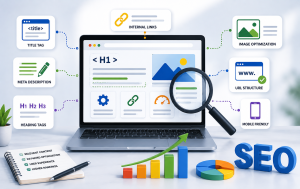
Key elements include quality content, keywords, title tags, meta descriptions, headings, image optimization, internal links, and user-friendly URLs.
4. Does On-Page SEO improve Google rankings?
Yes. Proper optimization helps search engines evaluate your content more effectively, which can improve your chances of ranking higher.
5. How often should On-Page SEO be updated?
Important pages should be reviewed regularly and updated whenever information becomes outdated or user needs shift.
6. Is keyword placement still important?
Yes. Keywords should appear naturally in important parts of the page without making the content feel forced or repetitive.
7. What is the difference between On-Page SEO and Off-Page SEO?
On-Page SEO focuses on changes made within your website, while Off-Page SEO involves external efforts that build authority and trust.
8. Does image optimization help SEO?
Yes. Optimized images can improve page speed, accessibility, and search engine understanding.
9. Can On-Page SEO increase organic traffic?
Yes. Well-optimized pages are more likely to appear in relevant searches and attract visitors who are looking for your content.
10. Is On-Page SEO enough for long-term success?
On-Page SEO is important, but combining it with Technical SEO, Off-Page SEO, and high-quality content creates a stronger long-term strategy.