Growing a business online has become more competitive than ever. While Search Engine Optimization (SEO) helps businesses achieve long-term visibility, many companies also need faster results to attract customers and generate leads. This is where PPC (Pay-Per-Click) Marketing plays an important role.
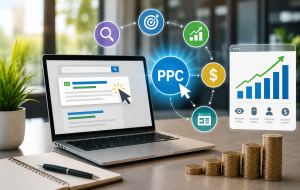
PPC (Pay-Per-Click) Marketing allows businesses to display advertisements on search engines and other online platforms. Instead of paying simply for showing an ad, businesses pay only when someone clicks on it. This makes PPC (Pay-Per-Click) Marketing a measurable and cost-effective marketing strategy for businesses of every size.
What Is PPC (Pay-Per-Click) Marketing?
PPC (Pay-Per-Click) Marketing stands for Pay-Per-Click Marketing. It is a digital advertising model where advertisers pay only when a user clicks on their advertisement.
Businesses use PPC campaigns to promote products, services, or special offers through platforms such as Google Ads, Microsoft Advertising, and social media advertising networks. This helps attract people who are actively searching for relevant solutions.
How Does PPC (Pay-Per-Click) Marketing Work?
A PPC campaign begins by selecting keywords related to your products or services. When someone searches using those keywords, the advertising platform may display your advertisement in the search results or across partner websites.
If the user clicks on your advertisement, they are directed to your website or landing page. You pay only for the click, giving you greater control over your advertising budget and campaign performance.
Why PPC (Pay-Per-Click) Marketing Is Important
Many businesses want immediate online visibility. Unlike SEO, which often takes time to build organic rankings, PPC (Pay-Per-Click) Marketing can generate targeted traffic soon after campaigns go live.
It also helps businesses promote new products, increase brand awareness, generate qualified leads, and reach customers at the right moment.
Benefits of PPC (Pay-Per-Click) Marketing
Reach the Right Audience
PPC platforms allow businesses to target people based on location, interests, device type, language, and search intent. This improves the chances of reaching potential customers who are genuinely interested in your services.
Generate Faster Website Traffic
Well-optimized PPC campaigns can drive visitors to your website almost immediately, making them useful for product launches, seasonal promotions, and lead generation.
Control Your Marketing Budget
Businesses can decide how much they want to spend each day or month. Campaign budgets can be adjusted at any time based on performance and business goals.
Measure Campaign Performance
Every campaign provides valuable data, including clicks, impressions, conversions, and customer engagement. These insights help businesses improve future marketing decisions.
Increase Business Conversions
When advertisements are relevant and landing pages provide a positive user experience, PPC can increase enquiries, sales, and customer conversions.
Best Practices for Successful PPC Campaigns
- Choose relevant keywords that match customer search intent.
- Write clear and engaging advertisement copy.
- Create fast and user-friendly landing pages.
- Include a strong Call-to-Action (CTA).
- Monitor campaign performance regularly.
- Test different headlines and advertisements.
- Optimize campaigns based on performance data.
Common PPC Mistakes to Avoid
Some businesses target very broad keywords, ignore landing page quality, or stop monitoring campaigns after launch.
Avoid sending visitors to irrelevant pages, using unclear advertisements, overlooking mobile users, or ignoring campaign analytics. Continuous optimization produces better long-term results.
Conclusion
PPC (Pay-Per-Click) Marketing is one of the fastest ways to increase online visibility, attract qualified visitors, and generate measurable business results. By targeting the right audience, monitoring campaign performance, and improving advertisements over time, businesses can use PPC to achieve sustainable growth.
Although PPC can deliver quick results, combining it with SEO, Content Marketing, and a well-designed website creates a stronger long-term digital marketing strategy.
Frequently Asked Questions (FAQs)
1. What does PPC stand for?
PPC stands for Pay-Per-Click, a digital advertising model where businesses pay only when someone clicks on their advertisement.
2. How does PPC (Pay-Per-Click) Marketing work?
Businesses choose relevant keywords, create advertisements, and bid for ad placements. When users click the ad, they are directed to the business website, and the advertiser pays for that click.
3. Why is PPC (Pay-Per-Click) Marketing important?
PPC helps businesses generate targeted website traffic quickly, increase visibility, and attract potential customers who are actively searching for products or services.
4. Which platforms support PPC (Pay-Per-Click) Marketing?
Popular PPC platforms include Google Ads, Microsoft Advertising, Facebook Ads, Instagram Ads, and LinkedIn Ads.
5. Is PPC suitable for small businesses?
Yes. PPC offers flexible budgeting, audience targeting, and measurable results, making it suitable for businesses of all sizes.
6. How much does PPC cost?
The cost depends on factors such as keyword competition, industry, audience targeting, and campaign quality. Businesses can set daily or monthly spending limits.
7. How can businesses improve PPC performance?
Use relevant keywords, create compelling advertisements, optimize landing pages, monitor campaign performance, and regularly test different strategies.
8. What is the difference between PPC and SEO?
PPC generates paid traffic quickly, while SEO focuses on improving organic search rankings over time. Both strategies work well together.
9. What metrics should businesses track in PPC campaigns?
Key metrics include Click-Through Rate (CTR), Cost Per Click (CPC), Conversion Rate, Cost Per Acquisition (CPA), and Return on Investment (ROI).
10. Can PPC (Pay-Per-Click) Marketing increase business sales?
Yes. A well-managed PPC campaign can attract qualified visitors, generate more leads, improve conversions, and support overall business growth.